Table Of Content
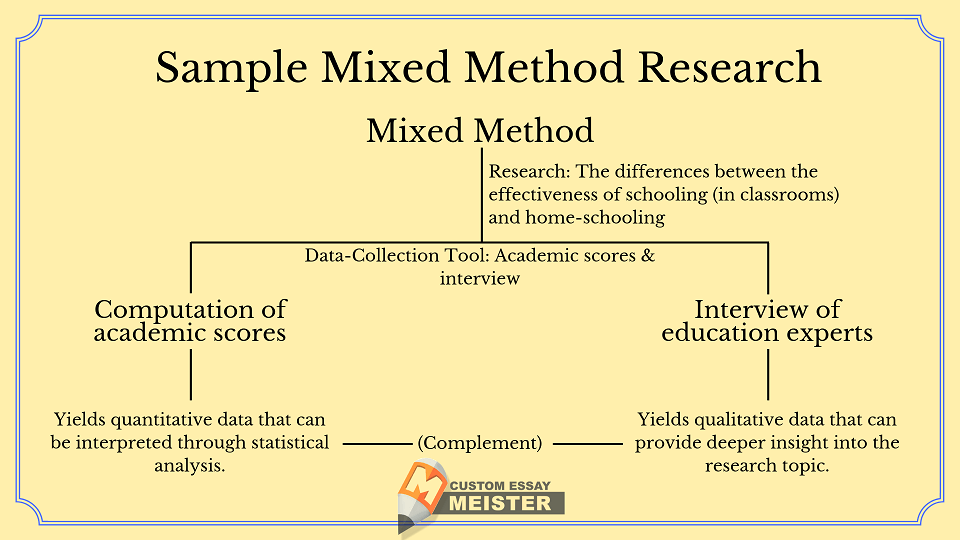
Mixing in the experiential stage can take many different forms, for example the use of cognitive interviews to improve a questionnaire (tool development), or selecting people for an interview on the basis of the results of a questionnaire (sampling). Extending the definition by Guest (2013), we define the point of integration as “any point in a study where two or more research components are mixed or connected in some way”. Then, the point of integration in the two examples of this paragraph can be defined more accurately as “instrument development”, and “development of the sample”.
The study
In other words, this tool could engage learners with an instructional process, leading to the achievement of learning outcomes29,45. This is consistent with previous research, where challenging content for simulated patients could make learners more engaged with a learning process55. However, the balance between task challenges and learner competencies is certainly required for the design of learning activities56,57.
Create a file for external citation management software
In this regard, Mathison (1988) recommends determining whether deviating results shown by the data can be explained by knowledge about the research and/or knowledge of the social world. Differences between results from different data sources could also be the result of properties of the methods involved, rather than reflect differences in reality (Yanchar and Williams 2006). In general, the conclusions of the individual components can be subjected to an inference quality audit (Teddlie and Tashakkori 2009), in which the researcher investigates the strength of each of the divergent conclusions. We recommend that researchers first determine whether there is “real” divergence, according to the strategies mentioned in the last paragraph.
Starting also in 2005, the British Homerton School of Health Studies has organised a series of international conferences on mixed methods. Moreover, MMR was on the list of sessions in a number of conferences on qualitative research (see, e.g., Creswell 2012). This framework makes it possible to contextualize the emergence of MMR in a socio-historical way. It also enables an assessment of some of the characteristics of MMR as a scientific product, since Bourdieu insists on the homology between the objective positions in a field and the position-takings of the agents who occupy these positions. As a new methodological approach, MMR is the result of the position-takings of its producers.
Nevertheless, as a distinct subfield, it also has specific principles that govern the production of knowledge and the rewards of domination. In the present case, we can interpret the various disciplines in the social sciences as more or less autonomous spaces that revolve around the shared stake in producing legitimate scientific knowledge by the standards of the field. Scholars operating in a field are endowed with initial and accumulated field-specific capital, and are engaged in the struggle to gain additional capital (mainly scientific and intellectual prestige) in order to advance their position in the field.
Performance and feasibility of reactive surveillance and response strategies for malaria elimination in Vietnam: a mixed ... - Malaria Journal
Performance and feasibility of reactive surveillance and response strategies for malaria elimination in Vietnam: a mixed ....
Posted: Mon, 07 Aug 2023 07:00:00 GMT [source]
How to Construct a Mixed Methods Research Design
An investigation, in Morse and Niehaus’s (2009) view, is focused primarily on either exploration-and-description or on testing-and-prediction. In the first case, the theoretical drive is called “inductive” or “qualitative”; in the second case, it is called “deductive” or “quantitative”. In the case of mixed methods, the component that corresponds to the theoretical drive is referred to as the “core” component (“Kernkomponente”), and the other component is called the “supplemental” component (“ergänzende Komponente”). In Morse’s notation system, the core component is written in capitals and the supplemental component is written in lowercase letters. For example, in a QUAL → quan design, more weight is attached to the data coming from the core qualitative component. Due to the decisive character of the core component, the core component must be able to stand on its own, and should be implemented rigorously.
What should be considered when evaluating mixed methods research?
Therefore, complex designs need to be constructed and modified as needed, and during the writing phase the design should be described in detail and perhaps given a creative and descriptive name. To ensure its educational impact was significant, the expected learning outcomes were formulated based on insights gathered from a survey with experienced instructors from the Department of Advanced General Dentistry, Faculty of Dentistry, Mahidol University. These learning outcomes covered areas of online communication skill, technical issues, technology literacy of patients, limitations of physical examination, and privacy concerns of personal information. Learning scenario and instructional content were subsequently designed to support learners in achieving the expected learning outcomes, with their alignments validated by three experts in dental education.
Theme 3: Pedagogical components
NVivo (version 14, QSR International) was used to performed the qualitative data analysis. Subsequently, a conceptual framework was constructed to demonstrate emerging themes and subthemes together with their relationships. A feedback system was carefully considered and implemented into the gamified online role-play. Formative feedback was instantly delivered to learners through verbal and non-verbal communication, including words (content), tone of voice, facial expressions, and gestures of the simulated patient. This type of feedback allowed participants to reflect on whether or not their inputs were appropriate, enabling them to learn from their mistakes, or so-called the role of failure34. Summative feedback was also provided at the end of the role-play through a reflection from a simulated patient and suggestions from an instructor.
The challenging situations were potential technical concerns which could occur frequently during video conferencing, including network problems (e.g., internet disconnection and poor connection) and audiovisual quality issues. The participants were blinded to the selected card, while it was revealed to only the simulated patient. The challenging conditions were mimicked by the organizers and simulated patient, allowing learners to deal with difficulties.
Rather, it also requires carefully considering the relationship between the two and method flexibility. All authors approved the content of the manuscript and have contributed significantly to the research involved in the process of protocol development, data collection and analysis, discussion and writing for manuscript publication and process of manuscript’s revision. Of all general characteristics, only income, duration of receiving hemodialysis, and illness with other disease showed a statistical difference between the intervention and control groups at baseline. The home telehealth model was designed and developed based on results from the first phase of the study [24]. The model was focused on video visiting, telephone counselling, web-based education and monitoring, and preparing for the referral system. In the second phase of the project, a repeated measures experimental design was implemented.
(PDF) Closing a chapter? A protocol for a longitudinal mixed methods study on retirement from elite sport - ResearchGate
(PDF) Closing a chapter? A protocol for a longitudinal mixed methods study on retirement from elite sport.
Posted: Thu, 16 Nov 2023 08:00:00 GMT [source]
Standard care for persons receiving hemodialysis in government hospital in Thailand includes routine laboratory investigations, physical examinations, health education, consultations by a renal nurse and/or a general nurse, and monthly follow-ups. After finishing the study, the participants in the control group were invited to join the home telehealth model and received copies of the set of manuals on how to manage their hemodialysis at home. Home telehealth can be used to deliver a range of interventions, from providing information to supporting therapeutic procedures.
ANOVA was used to detect the interaction of the model and statistically significant differences in laboratory results (BUN, Cr, Hb, Hct, K, Alb, Kt/V, nPCR) between the experimental and control groups at baseline and at 3 and 6 months. The participants were asked to provide information about their age, gender, marital status, educational level, occupation, and household income by completing the demographic data form. Also, the participants were asked about the duration of their hemodialysis treatment, while blood samples, and data related to their health status and health-related quality of life were collected at baseline (the firs week), 3 months (the last week), and 6 months (the last week). Considering this situation, nurse-led telehealth could contribute to managing some of these problems by using information and communication technologies [11]. Telehealth is a broad term encompassing the use of electronic communication to provide clinical care by replacing face-to-face visits; however, the focus here is on interactive videoconferencing, remote monitoring, mobile phones, web applications, and the internet of things [12].
The first phase of the wider mixed-methods study aimed to describe and explore symptom experiences and needs related to the integration of home telehealth into holistic care with nurse oversight for OPLWH. A survey study design with a nonprobability sampling method was employed, and OPLWH were surveyed over a six-month period (between 1 January and 30 June 2017). Participants were recruited from two hemodialysis units at two hospitals in Chiang Mai province. The instruments included the VOICES (View of Informal Carers Evaluation of Service-ESRD/Thai patients’ version) questionnaire. Albeit the robust design and data collection tools to assure reliability and validity as well as transparency of this study, a few limitations were raised leading to a potential of further research. More learning scenarios in other dental specialties should also be included to validate its effectiveness, as different specialties could have different limitations and variations.
Much more important, however, than a design name is for the author to provide an accurate description of what was done in the research study, so the reader will know exactly how the study was conducted. Notice that Morse and Niehaus (2009) included four mixed methods designs (the first four designs shown above) and four multimethod designs (the second set of four designs shown above) in their typology. The reader can, therefore, see that the design notation also works quite well for multimethod research designs. In addition, they assume that the core component should always be performed either concurrent with or before the supplemental component. For example, in a conversion design, qualitative categories and themes might be first obtained by collection and analysis of qualitative data, and then subsequently quantitized (Teddlie and Tashakkori 2009). Likewise, with Greene et al.’s (1989) initiation purpose, the initiation strand follows the unexpected results that it is supposed to explain.
Hunter and Brewer have developed a somewhat different approach to combining methods that explicitly targets data gathering techniques and largely avoids epistemological discussions. In Brewer and Hunter (2006) they discuss the MMR approach very briefly and only include two references in their bibliography to the handbook of Tashakkori and Teddlie (2003), and at the end of 2013 they had not published in the JMMR. Fielding, meanwhile, has written two articles for the JMMR (Fielding and Cisneros-Puebla 2009; Fielding 2012).


No comments:
Post a Comment